The Old Believers
The largest, most accurate source for Old Believer history, worship, and theology resources.
Latest Articles
Old Believer Works
-
On the Sacraments. From the Great Catechism
From the Great Catechism. -Written by Lavrentiy Zizaniy On the Seven Holy Sacraments of the Church Chapter 72 Question. Is it necessary and a matter of salvation to have teaching and careful knowledge about the seven holy sacraments? Answer. It is exceedingly necessary. For by them we are all sanctified and obtain salvation. He who does…
-
On the Difficulties of Adapting Newcomers in the Old Orthodox Pomorian Church
“Whoever is persuaded and believes that our teaching and words are true, and promises that he can live in accordance with them, is taught to pray and fast, asking God for the forgiveness of former sins, and we pray and fast together with him. Then we lead him to where there is water, and he…
Calendar Days
-
Homily on the 24th Sunday After Pentecost. -Met. Korniliy (Titov)
Dear brothers and sisters! Often, in times of sorrow and affliction, we turn to God with a plea for help. When we are prosperous and in good bodily health, we are little inclined to think about our soul, about salvation, or about giving thanks to God. That is why the Lord, in His most wise…
-
Homily on the 23rd Sunday after Pentecost. -Met. Korniliy (Titov)
(Luke 8:26–39 – The Healing of the Gadarene Demoniac) Dear brothers and sisters in Christ! The Gospel account we heard today at the Divine Liturgy about the man possessed by demons may seem far removed from our everyday lives. Yet it is no accident that, in the yearly cycle of Sunday Gospels, this story of…
Patristic Works
-
The Shepherd. -Hermas
BOOK ONE. VISIONS First Vision. The Reproof of Hermas for his own weaknesses and for his neglect in correcting his children I. The one who had brought me up sold a certain young girl at Rome. After many years I saw her again, recognized her, and began to love her as a sister. Some time…
-
Word 4: On Repentance. -St. Maxim the Greek
Sermon 4: On Repentance, very profitable for those who read it with faith, sincere love, careful attention, and due discernment My soul, behold: in this present year also, by the great longsuffering and abundant loving-kindness of God the Lover of mankind who created us, the Lord of all things, we have once again reached the…
Prayers and Liturgics
-
Rite of Self-baptism
Reconstructed from a fragment of a treatise in a copy from the last third of the 19th century, in 16 sheets, “On the possibility of self-baptism and the rite of self-baptism.” Read all this to the end for our catechization and correction, that you may understand, and be perfect. It is praiseworthy to perform this…
-
Order of Renouncing Heresy (Small Beginning)
From a debate between A.A. Antipin and Pomor apologist V.A. Voykin God, be merciful unto me, a sinner. (Bow) O Lord, who created me, have mercy on me. (Bow) I have sinned without number, O Lord, have mercy on me, and forgive me, a sinner. (Bow) It is worthy, for in truth to bless thee,…
Scriptures and Commentary
-
Psalm 1
Blessed is the man, which went not unto the counsel of the ungodly, and stood not on the path of sinners, and sat not in the seat of the pestilent. But his will is in the law of the Lord, and on his law doth he meditate day and night. And he shall be like…
Canons
-
Rules of the Holy Apostles
On the Rules of the Holy Apostles In all collections of the canons of the Orthodox Eastern Church, the rules of the holy apostles hold the foremost place. From their title, one might infer that these rules are attributed to the holy apostles. However, there is no evidence to suggest that these rules, in the…
-
Didache
The Teaching of the Lord to the Gentiles through the Twelve Apostles Chapter 1 There are two paths: one of life and one of death, and there is a great difference between the two paths. The path of life is this: First, you shall love God who created you; second, you shall love your neighbor…
Our Mission
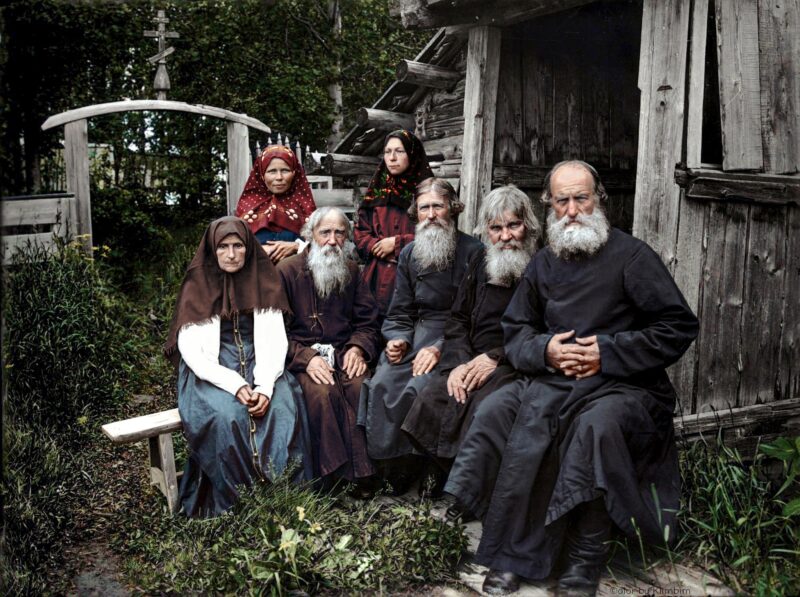
Bridging five centuries of tradition with today’s reader, The Old Believers offers carefully-crafted English translations of Old-Rite sermons, articles, and liturgical materials—texts seldom found outside Russian or Church Slavonic, so that scholars, clergy, and the simply curious may hear the original voice of the Old Believer Church without linguistic barriers. We publish freely, without ads, trusting that beauty and accuracy speak for themselves. Explore the Library, browse our self-published books, and join us as we safeguard a heritage too precious to fade.
-
Who are the Old Believers?
Old Believers are Orthodox Christians who did not accept the reforms of the Russian Church implemented in the mid-17th century by Patriarch Nikon and Tsar Alexei Mikhailovich Romanov. Although the term “Old Ritualist” (старообрядцы) is part of the official name of the Russian Orthodox Old Believer Church, it was adopted out of historical necessity and does not fully convey the richness of Orthodox doctrine upheld by the Old Believers.
The term “rite” (обряд) appeared only after the church schism, during the early 18th century under Peter the Great. Christians who did not accept the reform were labeled schismatics by the dominant Church, shifting the blame for the tragic events onto those who sought to preserve the ancient traditions. It wasn’t until the reign of Empress Catherine the Great that a less offensive term—“Old Believers”—was allowed. The guardians of pre-reform church traditions referred to themselves as Ancient Orthodox Christians but accepted the term “Old Believers” to emphasize their external differences from the dominant Church. If the adherents of the ancient faith are called Old Believers, it follows that supporters of the reform could be referred to as New Ritualists.
Today, New Ritualists often claim there is essentially no difference between the old and new rites and that the perceived ignorance of the Old Believers is the only obstacle to the reunification of these two streams of Russian Orthodoxy. However, during the mid-17th century reforms, the exact opposite was asserted: the old rites were declared un-Orthodox and accused of distorting Orthodox doctrine. Those who resisted were forced to accept the changes under threat of excommunication and civil punishment.
By the second half of the 19th century, the work of church historians confirmed that the old rites and practices had been used in the Orthodox Church since ancient times and served as external expressions of Orthodox dogma. In contrast, the new rites and practices introduced by the reform were borrowed from religious movements that had distorted Orthodoxy and failed to fully reflect the depth of Orthodox teaching. For this reason, Orthodox tradition strictly forbids altering certain external practices to avoid harming their internal significance, such as the sign of the cross, the Creed, or the use of leavened bread in the Eucharist.
— Priest Evgeny Gureev
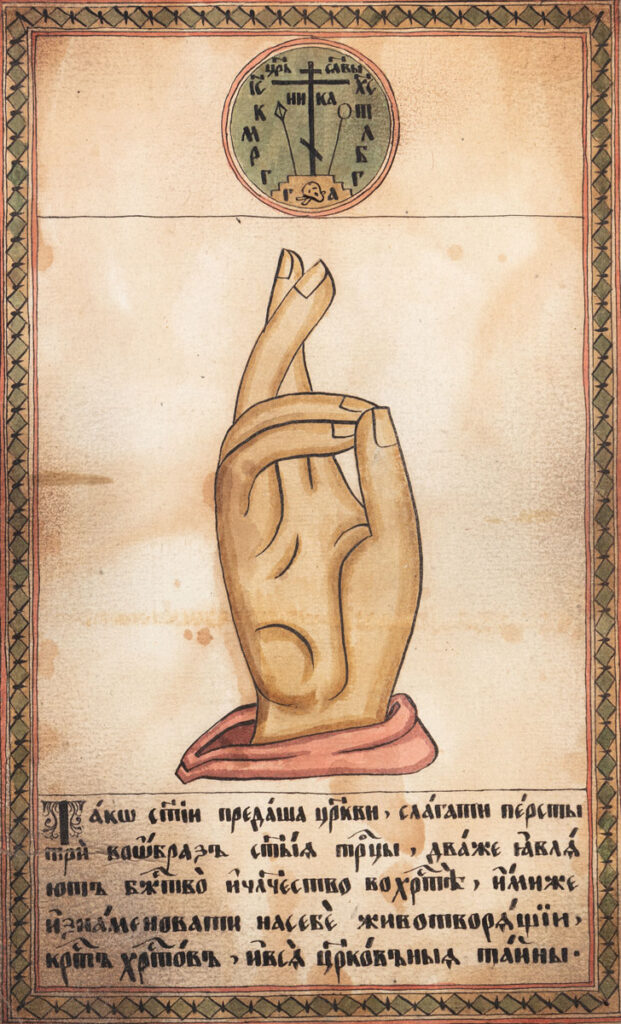
“A ritual, at the time of its creation, was born of a great thought, immense spiritual energy, and a profound spiritual fervor. And yet all energy is always preserved according to the law, so to speak, of ‘the conservation of spiritual energy.’ Just as heat is retained, the spiritual power of a ritual is preserved within it in a hidden state.”
—Bishop Mikhail (Semyonov)